Kamis, 13 Desember 2012

[O275.Ebook] Ebook Download The Very Rev. Father Paul of Moll - A Flemish Benedictine and Wonder-Worker of the Nineteenth Century 1824-1896, by Edward Van Speybrouck

Ebook Download The Very Rev. Father Paul of Moll - A Flemish Benedictine and Wonder-Worker of the Nineteenth Century 1824-1896, by Edward Van Speybrouck

Reading guide The Very Rev. Father Paul Of Moll - A Flemish Benedictine And Wonder-Worker Of The Nineteenth Century 1824-1896, By Edward Van Speybrouck by online could be likewise done conveniently every where you are. It seems that waiting the bus on the shelter, waiting the list for line up, or various other areas possible. This The Very Rev. Father Paul Of Moll - A Flemish Benedictine And Wonder-Worker Of The Nineteenth Century 1824-1896, By Edward Van Speybrouck could accompany you during that time. It will certainly not make you feel bored. Besides, by doing this will also enhance your life high quality.

The Very Rev. Father Paul of Moll - A Flemish Benedictine and Wonder-Worker of the Nineteenth Century 1824-1896, by Edward Van Speybrouck

The Very Rev. Father Paul of Moll - A Flemish Benedictine and Wonder-Worker of the Nineteenth Century 1824-1896, by Edward Van Speybrouck


The Very Rev. Father Paul of Moll - A Flemish Benedictine and Wonder-Worker of the Nineteenth Century 1824-1896, by Edward Van Speybrouck

Ebook Download The Very Rev. Father Paul of Moll - A Flemish Benedictine and Wonder-Worker of the Nineteenth Century 1824-1896, by Edward Van Speybrouck

Just how if your day is started by reviewing a book The Very Rev. Father Paul Of Moll - A Flemish Benedictine And Wonder-Worker Of The Nineteenth Century 1824-1896, By Edward Van Speybrouck However, it is in your gadget? Everyone will constantly touch and also us their gizmo when getting up as well as in early morning activities. This is why, we intend you to also check out a book The Very Rev. Father Paul Of Moll - A Flemish Benedictine And Wonder-Worker Of The Nineteenth Century 1824-1896, By Edward Van Speybrouck If you still puzzled the best ways to obtain guide for your gadget, you could adhere to the way right here. As below, our company offer The Very Rev. Father Paul Of Moll - A Flemish Benedictine And Wonder-Worker Of The Nineteenth Century 1824-1896, By Edward Van Speybrouck in this web site.

When going to take the experience or thoughts kinds others, publication The Very Rev. Father Paul Of Moll - A Flemish Benedictine And Wonder-Worker Of The Nineteenth Century 1824-1896, By Edward Van Speybrouck can be a good resource. It holds true. You could read this The Very Rev. Father Paul Of Moll - A Flemish Benedictine And Wonder-Worker Of The Nineteenth Century 1824-1896, By Edward Van Speybrouck as the source that can be downloaded and install here. The means to download is also simple. You can see the link page that we provide and then buy guide to make a bargain. Download and install The Very Rev. Father Paul Of Moll - A Flemish Benedictine And Wonder-Worker Of The Nineteenth Century 1824-1896, By Edward Van Speybrouck and you can put aside in your very own device.

Downloading guide The Very Rev. Father Paul Of Moll - A Flemish Benedictine And Wonder-Worker Of The Nineteenth Century 1824-1896, By Edward Van Speybrouck in this internet site lists can make you a lot more advantages. It will reveal you the most effective book collections and finished compilations. Plenty publications can be discovered in this site. So, this is not just this The Very Rev. Father Paul Of Moll - A Flemish Benedictine And Wonder-Worker Of The Nineteenth Century 1824-1896, By Edward Van Speybrouck Nonetheless, this book is referred to read due to the fact that it is an inspiring book to make you much more chance to get encounters and ideas. This is basic, read the soft documents of guide The Very Rev. Father Paul Of Moll - A Flemish Benedictine And Wonder-Worker Of The Nineteenth Century 1824-1896, By Edward Van Speybrouck and you get it.

Your perception of this book The Very Rev. Father Paul Of Moll - A Flemish Benedictine And Wonder-Worker Of The Nineteenth Century 1824-1896, By Edward Van Speybrouck will certainly lead you to get exactly what you precisely require. As one of the impressive books, this book will certainly provide the visibility of this leaded The Very Rev. Father Paul Of Moll - A Flemish Benedictine And Wonder-Worker Of The Nineteenth Century 1824-1896, By Edward Van Speybrouck to accumulate. Even it is juts soft documents; it can be your collective documents in gadget as well as various other gadget. The essential is that use this soft documents book The Very Rev. Father Paul Of Moll - A Flemish Benedictine And Wonder-Worker Of The Nineteenth Century 1824-1896, By Edward Van Speybrouck to read and take the advantages. It is what we suggest as book The Very Rev. Father Paul Of Moll - A Flemish Benedictine And Wonder-Worker Of The Nineteenth Century 1824-1896, By Edward Van Speybrouck will certainly boost your thoughts and mind. After that, reviewing book will certainly also enhance your life high quality a lot better by taking good activity in well balanced.

The Very Rev. Father Paul of Moll - A Flemish Benedictine and Wonder-Worker of the Nineteenth Century 1824-1896, by Edward Van Speybrouck

  • Sales Rank: #7436168 in Books
  • Published on: 1910
  • Binding: Hardcover

Most helpful customer reviews

See all customer reviews...

The Very Rev. Father Paul of Moll - A Flemish Benedictine and Wonder-Worker of the Nineteenth Century 1824-1896, by Edward Van Speybrouck PDF
The Very Rev. Father Paul of Moll - A Flemish Benedictine and Wonder-Worker of the Nineteenth Century 1824-1896, by Edward Van Speybrouck EPub
The Very Rev. Father Paul of Moll - A Flemish Benedictine and Wonder-Worker of the Nineteenth Century 1824-1896, by Edward Van Speybrouck Doc
The Very Rev. Father Paul of Moll - A Flemish Benedictine and Wonder-Worker of the Nineteenth Century 1824-1896, by Edward Van Speybrouck iBooks
The Very Rev. Father Paul of Moll - A Flemish Benedictine and Wonder-Worker of the Nineteenth Century 1824-1896, by Edward Van Speybrouck rtf
The Very Rev. Father Paul of Moll - A Flemish Benedictine and Wonder-Worker of the Nineteenth Century 1824-1896, by Edward Van Speybrouck Mobipocket
The Very Rev. Father Paul of Moll - A Flemish Benedictine and Wonder-Worker of the Nineteenth Century 1824-1896, by Edward Van Speybrouck Kindle

The Very Rev. Father Paul of Moll - A Flemish Benedictine and Wonder-Worker of the Nineteenth Century 1824-1896, by Edward Van Speybrouck PDF

The Very Rev. Father Paul of Moll - A Flemish Benedictine and Wonder-Worker of the Nineteenth Century 1824-1896, by Edward Van Speybrouck PDF

The Very Rev. Father Paul of Moll - A Flemish Benedictine and Wonder-Worker of the Nineteenth Century 1824-1896, by Edward Van Speybrouck PDF

Selasa, 11 Desember 2012

[G649.Ebook] Ebook Free Introduction to Visual Basic Using .NET, by Dana L. Wyatt, Robert J. Oberg

Ebook Free Introduction to Visual Basic Using .NET, by Dana L. Wyatt, Robert J. Oberg

This is why we advise you to constantly see this page when you require such book Introduction To Visual Basic Using .NET, By Dana L. Wyatt, Robert J. Oberg, every book. By online, you might not go to get the book store in your city. By this on the internet library, you could discover guide that you actually want to review after for long period of time. This Introduction To Visual Basic Using .NET, By Dana L. Wyatt, Robert J. Oberg, as one of the advised readings, tends to be in soft file, as every one of book collections right here. So, you might also not wait for few days later on to get as well as check out guide Introduction To Visual Basic Using .NET, By Dana L. Wyatt, Robert J. Oberg.

Introduction to Visual Basic Using .NET, by Dana L. Wyatt, Robert J. Oberg

Introduction to Visual Basic Using .NET, by Dana L. Wyatt, Robert J. Oberg


Introduction to Visual Basic Using .NET, by Dana L. Wyatt, Robert J. Oberg

Ebook Free Introduction to Visual Basic Using .NET, by Dana L. Wyatt, Robert J. Oberg

Do you believe that reading is an essential task? Find your reasons adding is vital. Checking out a book Introduction To Visual Basic Using .NET, By Dana L. Wyatt, Robert J. Oberg is one component of delightful tasks that will certainly make your life quality better. It is not about just exactly what type of e-book Introduction To Visual Basic Using .NET, By Dana L. Wyatt, Robert J. Oberg you review, it is not only concerning how several e-books you check out, it has to do with the habit. Checking out behavior will be a way to make publication Introduction To Visual Basic Using .NET, By Dana L. Wyatt, Robert J. Oberg as her or his buddy. It will regardless of if they spend money and invest more e-books to finish reading, so does this e-book Introduction To Visual Basic Using .NET, By Dana L. Wyatt, Robert J. Oberg

As recognized, book Introduction To Visual Basic Using .NET, By Dana L. Wyatt, Robert J. Oberg is well known as the home window to open the globe, the life, and also extra point. This is exactly what the people currently need so much. Also there are many individuals which don't like reading; it can be a selection as reference. When you actually need the means to produce the following motivations, book Introduction To Visual Basic Using .NET, By Dana L. Wyatt, Robert J. Oberg will truly direct you to the way. Furthermore this Introduction To Visual Basic Using .NET, By Dana L. Wyatt, Robert J. Oberg, you will certainly have no regret to obtain it.

To get this book Introduction To Visual Basic Using .NET, By Dana L. Wyatt, Robert J. Oberg, you could not be so confused. This is on the internet book Introduction To Visual Basic Using .NET, By Dana L. Wyatt, Robert J. Oberg that can be taken its soft data. It is different with the on-line book Introduction To Visual Basic Using .NET, By Dana L. Wyatt, Robert J. Oberg where you can buy a book then the vendor will certainly send out the printed book for you. This is the area where you can get this Introduction To Visual Basic Using .NET, By Dana L. Wyatt, Robert J. Oberg by online and also after having deal with buying, you could download and install Introduction To Visual Basic Using .NET, By Dana L. Wyatt, Robert J. Oberg alone.

So, when you require quick that book Introduction To Visual Basic Using .NET, By Dana L. Wyatt, Robert J. Oberg, it does not have to wait for some days to receive the book Introduction To Visual Basic Using .NET, By Dana L. Wyatt, Robert J. Oberg You could directly get the book to conserve in your tool. Also you like reading this Introduction To Visual Basic Using .NET, By Dana L. Wyatt, Robert J. Oberg almost everywhere you have time, you could appreciate it to read Introduction To Visual Basic Using .NET, By Dana L. Wyatt, Robert J. Oberg It is surely useful for you that intend to get the more priceless time for reading. Why do not you spend five mins and also invest little money to obtain guide Introduction To Visual Basic Using .NET, By Dana L. Wyatt, Robert J. Oberg here? Never ever allow the new thing goes away from you.

Introduction to Visual Basic Using .NET, by Dana L. Wyatt, Robert J. Oberg

Using real-world examples and a detailed case study, Introduction to Visual Basic Using .NET helps you master VB.NET from the ground up, or rapidly migrate from VB6. The authors introduce the .NET Framework and Visual Studio.NET from the VB developer's perspective, examine VB.NET's basic coding constructs, and thoroughly explore both object-oriented programming and Windows Forms development. Coverage also includes: ADO.NET, threads, collections, delegates, attributes, and much more.

  • Sales Rank: #4440911 in Books
  • Published on: 2002-04-01
  • Original language: English
  • Number of items: 1
  • Dimensions: 9.10" h x 1.70" w x 6.60" l, 2.35 pounds
  • Binding: Paperback
  • 704 pages

From the Back Cover

Master VB.NET step-by-step, through practical examples and a case study.

Using real-world examples and a detailed case study, this book helps you master VB.NET from the ground up—or rapidly migrate to VB.NET from earlier versions of Visual Basic. Dana L. Wyatt and Robert Oberg present a thorough introduction to VB.NET the language, the .NET Framework, and Visual Studio.NET. They examine VB.NET's basic coding constructs, thoroughly explore object-oriented design with VB.NET, and offer systematic guidance for building next-generation Windows applications with Windows Forms. Coverage includes:

  • Classes, inheritance, and other elements of VB.NET object-oriented programming
  • Windows Forms: form design, controls, events, menus, toolbars, and dialogs
  • Visual Basic.NET's key interactions with the .NET Framework
  • Major .NET classes: collections, files, ADO.NET database access, and multithreading
  • Core VB.NET language features: data types, operators, control structures, and more
  • Attributes, custom attributes, metadata, and reflection
  • Techniques for building reusable .NET components

About the Author

DANA L. WYATT, Ph. D. formed EMCA Consulting in 1993 to provide advanced object-oriented training, mentoring, and consulting services. She received a Ph.D. in Computer Science from Texas A&M University and taught computer science for 13 years at Texas A&M, TCU, and the University of North Texas, receiving a NASA-ASEE fellowship for research at NASA's Goddard Space Flight Center.

ROBERT J. OBERG is founder and President of Object Innovations, a leading developer of integrated courseware on fundamental software including Microsoft .NET, COM+, and Java. His books include Understanding and Programming COM+, Introduction to C# Using .NET and Application Development Using C# and .NET (Prentice Hall PTR). He is editor of The Integrated .NET Series. Oberg holds a Ph.D. from Harvard University.

Excerpt. © Reprinted by permission. All rights reserved.
Preface

Microsoft's .NET is a revolutionary advance in programming technology that greatly simplifies application development. In addition to providing support for traditional desktop Windows applications, it provides tremendous support for Web-based services.

Microsoft's popular Visual Basic programming language has been upgraded to take advantage of the new .NET features. Visual Basic.NET, or simply VB.NET, has become a full object-oriented programming language with capabilities comparable to C++, Java, and Microsoft's new language C# (pronounced "C sharp").

This book is a practical introduction to programming in VB.NET and using services provided by .NET. It emphasizes the VB.NET language and is part of The Integrated .NET Series from Object Innovations and Prentice Hall PTR.

An important thrust of this book is to teach VB.NET programming from an object-oriented perspective. This book introduces object-oriented concepts early and includes a case study on object-oriented programming. The book is intended to be fully accessible to programmers who do not already have a background in object-oriented programming. Previous knowledge of Visual Basic is not essential.

The book may also be read by more experienced programmers who desire a simple introduction to VB.NET with many example programs. Although designed for working professionals, the book includes enough detail, careful explanations, and sample programs so that it can be useful as a college textbook.

VB.NET is now a fully object-oriented language. It supports classes, interfaces, interface and implementation inheritance, and polymorphism. It is also highly integrated with the .NET Framework. These features make VB.NET a compelling language for developing object-oriented and component-based systems. This book provides thorough coverage of all these features.

One of the strengths of Visual Basic, and the reason it has enjoyed such widespread use, is the ease with which Windows application can be developed. Microsoft has revamped the way that Windows applications are built under .NET. Windows Forms, used by .NET languages, represents a class library that brings uniformity to the components of a Windows application. The book includes substantial coverage of using Windows Forms in VB.NET.

VB.NET, as a language, is elegant and powerful. However, to fully utilize its capabilities, you must have a good understanding of how it works with the .NET Framework. The book examines several important interactions between VB.NET and the .NET Framework, and includes an introduction to major .NET classes for collections, files, databases, and threads.

Organization of This Book

This book is organized into five major parts and is structured to make it easy for you to isolate what you most need to know.

Part 1, which everyone should read, begins with an introduction to the .NET Framework. The second chapter provides a short introduction to hands-on programming using VB.NET, so that you can start writing code on .NET right away. The third chapter introduces Visual Studio.NET. It is the latest version of Microsoft's popular Visual Studio development environment and has many features that make application development easier and more pleasant. These chapters will equip you to use Visual Studio throughout the rest of the book.

Part 2 covers the core features of VB.NET. If you know Visual Basic, you will have a definite leg up in learning VB.NET, and you can quickly skim this section, paying attention to the information in the sidebars. Sidebars alert you to either (1) the first time a concept new to VB.NET is introduced, or (2) a significant change to the VB.NET language that experienced VB programmers should note. If you are not familiar with Visual Basic, this section is for you. It will quickly bring you up to speed on the core topics of data types, operators, and control structures.

Part 3 examines the object-oriented features of VB.NET. This language is now fully object-oriented, which is one of the most significant improvements in VB.NET. In this part, we begin by examine how classes are built. Subsequent chapters discuss implementation and interface inheritance. These topics are covered gradually and thoroughly, making this part of the book accessible to readers without previous object-oriented experience.

Part 4 covers Windows programming in VB.NET. Microsoft has adopted a new approach to developing Windows applications that will be readily apparent to previous VB programmers. Systematic coverage is presented on the core topics in Windows Forms, including form design, controls, events, menus, toolbars, and dialogs. The rich variety of useful controls provided by Windows Forms is covered in detail.

Part 5 explores the relationships between VB.NET and the .NET Framework. .NET collection classes are introduced. We also examine the .NET interfaces that classes must implement for fundamental operations such as copying and comparing objects. Delegates, a .NET callback mechanism, are discussed. We also introduce both VB.NET file I/O and database programming using ADO.NET. We look at multiple thread programming and attributes. Attributes are powerful in .NET, enabling the programmer to accomplish tasks declaratively, even while writing very little code. You can implement custom attributes in VB.NET. You can read information about custom attributes, or any other metadata, by a mechanism known as "reflection." The book concludes with an introduction to components and assemblies.

Sample Programs

The only way to really learn a programming language is to read and write many, many programs. This book provides many programs that illustrate features of VB.NET. The programs are clearly labeled in the text, and they can all be found in the software distribution that accompanies this book, available through our associated Web site. Also, a case study illustrates many features of VB.NET working together in combination, as they would in a practical application. We make a special point of demonstrating the object-oriented features of VB.NET. If you are new to OO, reading the case study is a must!

The sample programs are provided in a self-extracting file. When expanded, a directory structure is created, rooted in C:\OI\IntroVb. The sample programs are in directories Chap01, Chap02, and so on. All the samples for a given chapter are in individual folders within the chapter directories. The names of the folders are clearly identified in the text. An icon in the margin alerts you to a code example. The case study is in a directory called CaseStudy, at the same level as the chapter directories.

This book is part of The Integrated .NET Series. The sample programs for other books in the series are located in their own directories beneath \OI, so all the .NET examples from all books in the series will be located in a common area as you install them.

Web SiteHere's the Web site for the book series:www.objectinnovations.com/dotnet.htm

A link is provided at that Web site for downloading the sample programs for this book.

Most helpful customer reviews

0 of 0 people found the following review helpful.
A solid Intro for intermediate - advanced programmers
By R. Jones
This book is just what it says, and introduction. I found it useful for my purpose, to get a broad and deep enough "working understanding" of VB.NET.
It is a broad introduction, covering lots of advanced topics such as exceptions, hash tables, threading, .NET framework, etc. There are code examples for everything the author talks about and downloadable source code. This is a good book as long as it's used for it's intended purpose.
It is not a tutorial, in fact unless you are familiar with object oriented programming, threading, etc. much of this book may be too daunting. However, if you know Java or C++ you'll be able to devour this book. You know, at times I felt as if I was reading a Java book - the similarities in VB.NET are so striking.
Once so devoured however you will not find this book a satisfying reference for "big league" coding. You'll need to know much more about Visual Studio.NET and .NET framework for your serious applicaion development. Also I expect there tons of tiny tidbits about the language that a good reference would have. The index is disappointing - 8 pages for over 650 pages of text - but this is the rule, not the exception in these things. There are also no appendicies summarizing the language.

0 of 0 people found the following review helpful.
Outstanding book
By G.GNANA ARUN GANESH
I like this book because this book provides in-depth introductions to VB.NET language and to Windows Forms.This book introduces object-oriented concepts early and includes a case study on object-oriented programming. This book is appropriate for programmers who do not already have a strong background in object-oriented programming. This book is perfect for programmers who have basic knowledge in languages such as Visual Basic and COBOL programmers. But previous knowledge of Visual Basic is not indispensable.This book is not only for the beginners but also aims for experienced programmers by providing a concrete, concise and in-depth introduction to VB.NET with a lot of example programs.
The book presents the concept of object-oriented programming and talk about the important elements of object-oriented analysis and includes a case study. this book clearly defines in-depth, example-rich and provides a hands on introduction to the VB.NET using .NET. Using real-world examples and a detailed case study, this book helps you to master in VB.NET from the ground up or rapidly migrate to VB.NET from earlier versions of Visual Basic. I have recommended this book to others.

4 of 4 people found the following review helpful.
Excellent book
By G.GNANA ARUN GANESH
I like this book because this book provides in-depth introductions to VB.NET language and to Windows Forms.This book introduces object-oriented concepts early and includes a case study on object-oriented programming. This book is appropriate for programmers who do not already have a strong background in object-oriented programming. This book is perfect for programmers who have basic knowledge in languages such as Visual Basic and COBOL programmers. But previous knowledge of Visual Basic is not indispensable.This book is not only for the beginners but also aims for experienced programmers by providing a concrete, concise and in-depth introduction to VB.NET with a lot of example programs.
The book presents the concept of object-oriented programming and talk about the important elements of object-oriented analysis and includes a case study. this book clearly defines in-depth, example-rich and provides a hands on introduction to the VB.NET using .NET. Using real-world examples and a detailed case study, this book helps you to master in VB.NET from the ground up or rapidly migrate to VB.NET from earlier versions of Visual Basic.

See all 5 customer reviews...

Introduction to Visual Basic Using .NET, by Dana L. Wyatt, Robert J. Oberg PDF
Introduction to Visual Basic Using .NET, by Dana L. Wyatt, Robert J. Oberg EPub
Introduction to Visual Basic Using .NET, by Dana L. Wyatt, Robert J. Oberg Doc
Introduction to Visual Basic Using .NET, by Dana L. Wyatt, Robert J. Oberg iBooks
Introduction to Visual Basic Using .NET, by Dana L. Wyatt, Robert J. Oberg rtf
Introduction to Visual Basic Using .NET, by Dana L. Wyatt, Robert J. Oberg Mobipocket
Introduction to Visual Basic Using .NET, by Dana L. Wyatt, Robert J. Oberg Kindle

Introduction to Visual Basic Using .NET, by Dana L. Wyatt, Robert J. Oberg PDF

Introduction to Visual Basic Using .NET, by Dana L. Wyatt, Robert J. Oberg PDF

Introduction to Visual Basic Using .NET, by Dana L. Wyatt, Robert J. Oberg PDF

Kamis, 06 Desember 2012

[A915.Ebook] Download PDF The Elements of Journalism, Revised and Updated 3rd Edition: What Newspeople Should Know and the Public Should Expect, by Bill Kovach, Tom

Download PDF The Elements of Journalism, Revised and Updated 3rd Edition: What Newspeople Should Know and the Public Should Expect, by Bill Kovach, Tom

Checking out, once again, will certainly provide you something new. Something that you do not know after that exposed to be well known with the e-book The Elements Of Journalism, Revised And Updated 3rd Edition: What Newspeople Should Know And The Public Should Expect, By Bill Kovach, Tom message. Some knowledge or session that re got from reviewing publications is uncountable. More e-books The Elements Of Journalism, Revised And Updated 3rd Edition: What Newspeople Should Know And The Public Should Expect, By Bill Kovach, Tom you read, even more expertise you get, and much more possibilities to consistently like reviewing e-books. Since of this factor, checking out publication ought to be started from earlier. It is as exactly what you can get from the e-book The Elements Of Journalism, Revised And Updated 3rd Edition: What Newspeople Should Know And The Public Should Expect, By Bill Kovach, Tom
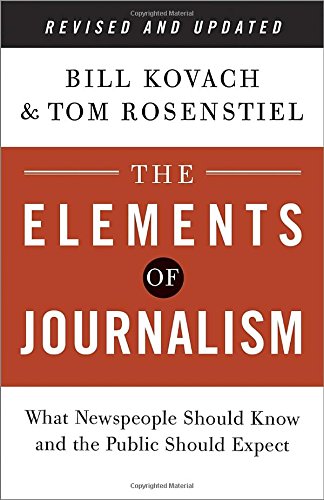
The Elements of Journalism, Revised and Updated 3rd Edition: What Newspeople Should Know and the Public Should Expect, by Bill Kovach, Tom

The Elements of Journalism, Revised and Updated 3rd Edition: What Newspeople Should Know and the Public Should Expect, by Bill Kovach, Tom


The Elements of Journalism, Revised and Updated 3rd Edition: What Newspeople Should Know and the Public Should Expect, by Bill Kovach, Tom

Download PDF The Elements of Journalism, Revised and Updated 3rd Edition: What Newspeople Should Know and the Public Should Expect, by Bill Kovach, Tom

Schedule The Elements Of Journalism, Revised And Updated 3rd Edition: What Newspeople Should Know And The Public Should Expect, By Bill Kovach, Tom is among the precious well worth that will make you always rich. It will not imply as abundant as the cash offer you. When some individuals have lack to face the life, people with many books often will certainly be wiser in doing the life. Why should be e-book The Elements Of Journalism, Revised And Updated 3rd Edition: What Newspeople Should Know And The Public Should Expect, By Bill Kovach, Tom It is actually not indicated that book The Elements Of Journalism, Revised And Updated 3rd Edition: What Newspeople Should Know And The Public Should Expect, By Bill Kovach, Tom will certainly give you power to reach everything. The book is to review and also what we indicated is the e-book that is checked out. You could additionally see how the publication qualifies The Elements Of Journalism, Revised And Updated 3rd Edition: What Newspeople Should Know And The Public Should Expect, By Bill Kovach, Tom and also numbers of book collections are offering right here.

Exactly how can? Do you assume that you don't need enough time to go with shopping publication The Elements Of Journalism, Revised And Updated 3rd Edition: What Newspeople Should Know And The Public Should Expect, By Bill Kovach, Tom Never mind! Just rest on your seat. Open your gadget or computer system and be on the internet. You can open up or check out the link download that we gave to obtain this The Elements Of Journalism, Revised And Updated 3rd Edition: What Newspeople Should Know And The Public Should Expect, By Bill Kovach, Tom By by doing this, you could obtain the on-line e-book The Elements Of Journalism, Revised And Updated 3rd Edition: What Newspeople Should Know And The Public Should Expect, By Bill Kovach, Tom Checking out the book The Elements Of Journalism, Revised And Updated 3rd Edition: What Newspeople Should Know And The Public Should Expect, By Bill Kovach, Tom by on-line can be truly done effortlessly by saving it in your computer and gizmo. So, you can continue every time you have cost-free time.

Reading guide The Elements Of Journalism, Revised And Updated 3rd Edition: What Newspeople Should Know And The Public Should Expect, By Bill Kovach, Tom by on-line could be likewise done effortlessly every where you are. It seems that waiting the bus on the shelter, waiting the checklist for line up, or various other places possible. This The Elements Of Journalism, Revised And Updated 3rd Edition: What Newspeople Should Know And The Public Should Expect, By Bill Kovach, Tom could accompany you during that time. It will not make you really feel bored. Besides, through this will additionally boost your life high quality.

So, just be right here, locate the e-book The Elements Of Journalism, Revised And Updated 3rd Edition: What Newspeople Should Know And The Public Should Expect, By Bill Kovach, Tom now as well as review that quickly. Be the first to review this e-book The Elements Of Journalism, Revised And Updated 3rd Edition: What Newspeople Should Know And The Public Should Expect, By Bill Kovach, Tom by downloading and install in the web link. We have other e-books to check out in this website. So, you could discover them also easily. Well, now we have actually done to provide you the best book to read today, this The Elements Of Journalism, Revised And Updated 3rd Edition: What Newspeople Should Know And The Public Should Expect, By Bill Kovach, Tom is actually proper for you. Never ever neglect that you require this book The Elements Of Journalism, Revised And Updated 3rd Edition: What Newspeople Should Know And The Public Should Expect, By Bill Kovach, Tom to make better life. Online book The Elements Of Journalism, Revised And Updated 3rd Edition: What Newspeople Should Know And The Public Should Expect, By Bill Kovach, Tom will really give simple of everything to read as well as take the perks.

The Elements of Journalism, Revised and Updated 3rd Edition: What Newspeople Should Know and the Public Should Expect, by Bill Kovach, Tom

Revised and updated with a new preface and material on the rise of social media, the challenges facing printed news, and how journalism can fulfill its purpose in the digital age.
 
Seventeen years ago, the Committee of Concerned Journalists gathered some of America’s most influential newspeople to ask the question, “What is journalism for?” Through exhaustive research, surveys, interviews, and public forums, they identified the essential elements that define journalism and its role in our society. The result is this, one of the most important books on the media ever written, and winner of the Goldsmith Book Award from Harvard, the Society of Professional Journalists award, and the Bart Richards Award from Penn State University.
 
Updated with new material covering the rise of social media, sponsored content, a new, collaborative web-based journalism in which anyone—professional or citizen—can produce news, and much more, this third edition of The Elements of Journalism is an essential read for journalists, students, and anyone hoping to stay informed in the digital age.

  • Sales Rank: #9367 in Books
  • Brand: Three Rivers Press CA
  • Published on: 2014-04-01
  • Released on: 2014-04-01
  • Original language: English
  • Number of items: 1
  • Dimensions: 8.00" h x .80" w x 5.20" l, 1.01 pounds
  • Binding: Paperback
  • 352 pages
Features
  • Three Rivers Press CA

Review
"At a time when technological and financial forces are creating formidable challenges to journalism's traditional values, Kovach and Rosenstiel have written an immensely valuable primer on who we are, what we do, and how we should do it."
-- David Halberstam

"The Elements of Journalism is a remarkable book that does a superb job of describing the problems, articulating the values, outlining the risks, and offering understandable and practical ways to respond to the difficulties of the present state of journalism. The Elements of Journalism ought to become required reading for every institution (and individual) engaged in journalism."
— Neil Rudenstine, President, Harvard University

"Of the many books that have been written about reporting the news, this one best captures the shortcomings, subtleties, and possibilities of modern journalism. It deserves to become as indispensable to journalists and journalism students as The Elements of Style."
— Tom Goldstein, Dean, Graduate School of Journalism, Columbia University

"In an age when partisan rancor and ratings-driven showmanship have crowded out the more subtle virtues of solid journalism, Tom Rosenstiel and Bill Kovach provide a timely refresher course in the importance of press fundamentals. They remind us that at its best, journalism is a high public calling, and all those who practice it have a deeper obligation to their readers and viewers than to the demands of the market."
— David Talbot, editor-in-chief, Salon.com

About the Author
Bill Kovach was editor of the Atlanta Journal-Constitution, the Washington bureau chief for the New York Times and curator of the Nieman Journalism Fellowship program at Harvard. He was founding chairman of The Committee of Concerned Journalists.
 
Tom Rosenstiel is executive director of the American Press Institute, founder of the Project for Excellence in Journalism, a former media critic for the Los Angeles Times, and chief congressional correspondent for Newsweek. He and Kovach have written two other books together.

Excerpt. © Reprinted by permission. All rights reserved.
Excerpted from Chapter 1

What Is Journalism For?

On a gray December morning in 1981, Anna Semborska woke up and flipped on the radio to hear her favorite program, Sixty Minutes Per Hour. Semborska, who was seventeen, loved the way the comedy revue pushed the boundaries of what people in Poland could say out loud. Though it had been on the air for some years, with the rise of the labor union Solidarity, 60MPH had become much more bold. Sketches like one about a dim-witted Communist doctor looking vainly to find a cure for extremism were an inspiration to Anna and her teenage friends in Warsaw. The program showed her that other people felt about the world the way she did, but had never dared express. "We felt that if things like these can be said on the radio then we are free," she would remember nearly twenty years later. (1)

But when Anna ran to the radio to tune in the show on December 13, 1981, she heard only static. She tried another station, then another. Nothing. She tried to call a friend and found no dial tone. Her mother called her to the window. Tanks were rolling by. The Polish military government had declared martial law, outlawed Solidarity, and put the clamps back on the media and on speech. The Polish experiment with liberalization was over.

Within hours, Anna and her friends began to hear stories that suggested something this time was different. In a little town called 'Swidnik near the Czech border, there were the dogwalkers. Every night at 7:30, when the state-run television news came on, nearly everyone in 'Swidnik went out and walked his dog in a little park in the center of town.

It became a daily silent act of protest and solidarity. We refuse to watch. We reject your version of truth.

In Gdansk, there were the black TV screens. People there began moving their television sets to the windows-with the screens pointed out to the street. They were sending a sign to one another, and the government. We, too, refuse to watch. We also reject your version of truth.

An underground press began to grow, on ancient hand-crank equipment. People began carrying video cameras and making private documentaries, which they showed secretly in church basements. Soon, Poland's leaders acknowledged they were facing a new phenomenon, something they had to go west to name. It was the rise of Polish public opinion. In 1983, the government created the first of several institutes to study it. It mostly conducted public opinion surveys. Others would sprout up throughout Eastern Europe as well. This new phenomenon was something totalitarian officials could not dictate. At best, they could try to understand it and then manipulate it, not unlike Western democratic politicians. They would not succeed.

Afterward, leaders of the movement toward freedom would look back and think the end of Communism owed a good deal to the coming of new information technology and the effect it had on human souls. In the winter of 1989, the man who shortly would be elected Poland's new president visited with journalists in Washington. "Is it possible for a new Stalin to appear today who could murder people?" Lech Walesa asked rhetorically. No, he answered himself. In the age of computers, satellites, faxes, VCRs, "it's impossible." Technology now made information available to too many people, too quickly. And information created democracy. (2)

What is journalism for?

For the Poles and others in emerging democracies the question was answered with action. Journalism was for building community. Journalism was for citizenship. Journalism was for democracy. Millions of people, empowered by a free flow of information, became directly involved in creating a new government and new rules for the political, social, and economic life of their country. Is that always journalism's purpose? Or was that true for one moment, in one place?

In the United States for the last half century or so the question "What is journalism for?" has rarely been asked, by citizens or journalists. You owned a printing press or a broadcasting license and you produced journalism. In the United States journalism has been reduced to a simple tautology: It was whatever journalists said it was. As Maxwell King, the former editor of the Philadelphia Inquirer, has said, "We let our work speak for itself." Or, when pressed, journalists take it as a given that they work in the public interest. (3)

This simplistic answer is no longer sufficient — if it ever really was to an increasingly skeptical public. Not now that the new communications technology with which anyone with a modem and a computer can claim to be "doing journalism." Not now that the technology has created a new economic organization of journalism in which the norms of journalism are being pulled and redefined, and sometimes abandoned.

Perhaps, some suggest, the definition of journalism has been exploded by technology, so now anything is seen as journalism.

But on closer examination, as the people of Poland demonstrated, the purpose of journalism is not defined by technology, or by journalists or the techniques they employ. As we will show, the principles and purpose of journalism are defined by something more basic — the function news plays in the lives of people.

For all that the face of journalism has changed, indeed, its purpose has remained remarkably constant, if not always well served, since the notion of "a press" first evolved more than three hundred years ago. And for all that the speed, techniques, and character of news delivery have changed, there already exists a clear theory and philosophy of journalism that flows out of the function of news.

The primary purpose of journalism is to provide citizens with the information they need to be free and self-governing.

As we listened to citizens and journalists, we heard that this obligation to citizens encompasses several elements. The news media help us define our communities, and help us create a common language and common knowledge rooted in reality. Journalism also helps identify a community's goals, heroes, and villains. "I've felt strongly for a long time that we proceed best as a society if we have a common base of information," NBC anchorman Tom Brokaw told our academic research partners. (4) The news media serve as a watchdog, push people beyond complacency, and offer a voice to the forgotten. "I want to give voices to people who need the voice . . . people who are powerless," said Yuen Tying Chan, a former reporter for the New York Daily News who has created a journalism training program in Hong Kong.5 James Carey, one of the founders of our committee, has put it this way in his own writing: Perhaps in the end journalism simply means carrying on and amplifying the conversation of people themselves. (6)

This definition has held so consistent through history, and proven so deeply ingrained in the thinking of those who produce news through the ages, that it is in little doubt. It is difficult, in looking back, even to separate the concept of journalism from the concept of creating community and later democracy. Journalism is so fundamental to that purpose that, as we will see, societies that want to suppress freedom must first suppress the press. They do not, interestingly, have to suppress capitalism. At its best, as we will also show, journalism reflects a subtle understanding of how citizens behave, an understanding that we call the Theory of the Interlocking Public.

Yet the longstanding theory and purpose of journalism are being challenged today in ways not seen before, at least in the United States. Technology is shaping a new economic organization of information companies, which is subsuming journalism inside it. The threat is no longer simply from government censorship. The new danger is that independent journalism may be dissolved in the solvent of commercial communication and synergistic self-promotion. The real meaning of the First Amendment — that a free press is an independent institution — is threatened for the first time in our history even without government meddling.

There are some who will contend that defining journalism is dangerous. To define journalism, they argue, is to limit it. Maybe doing so violates the spirit of the First Amendment: "Congress shall make no law . . . abridging the freedom of speech or of the press." This is why journalists have avoided licensing, like doctors and lawyers, they note. They also worry that defining journalism will only make it resistant to changing with the times, which probably will run it out of business.

Actually, the resistance to definition in journalism is not a deeply held principle but a fairly recent and largely commercial impulse. Publishers a century ago routinely championed their news values in front-page editorials, opinion pages, and company slogans, and just as often publicly assailed the journalistic values of their rivals. This was marketing. Citizens chose which publications to read based on their style and their approach to news. It was only as the press began to assume a more corporate and monopolistic form that it became more reticent. Lawyers also advised news companies against codifying their principles in writing for fear that they would be used against them in court. Avoiding definition was a commercial strategy. It was not born of the meaning of the First Amendment.

On the other side, some will argue that not only should journalism's purpose be unchanging, but its form should be constant as well. They see changes in the way journalism looks from when they were young, and fear that, in the memorable phrase of Neil Postman, we are "amusing ourselves to death." They miss another fact. Every generation creates its own journalism.

But the purpose, we have found, is the same.

Though journalists are uncomfortable defining what they do, they do fundamentally agree on their purpose. When we set out in 1997 to chart the common ground of newspeople, this was the first answer we heard: "The central purpose of journalism is to tell the truth so that people will have the information that they need to be sovereign." It came from Jack Fuller, an author, novelist, lawyer, and president of the Tribune Publishing Company, which produces the Chicago Tribune. (7)

Even people who resist the label of journalist, who work on the Web, offer a similar goal. Omar Wasow, a self-described "garage entrepreneur" who founded a website called New York Online, told us at one committee forum that his aim, in part, was helping to create citizens who are "consumers, devourers and debunkers of media . . . an audience who have engaged with the product and can respond carefully." (8)

Were these just disparate voices? Not really. In collaboration with the Pew Research Center for the People and the Press, we asked journalists what they considered the distinguishing feature of journalism. Those working in news volunteered this democratic function by nearly two to one over any other answer. (9) Open-ended in-depth interviews with a hundred more journalists conducted by developmental psychologists at Stanford, Harvard, and the University of Chicago with whom we collaborated came to the same conclusion. "News professionals at every level . . . express an adamant allegiance to a set of core standards that are striking in their commonality and in their linkage to the public information mission," they write. (10)

Ethics codes and journalism mission statements bear the same witness. The goal is "to serve the general welfare by informing the people," says the code of the American Society of Newspaper Editors, the largest association of print newsroom managers in North America. "Give light and the people will find their own way," reads the masthead of Scripps Company newspapers. Indeed, every newspaper mission statement on file with the American Society of Newspaper Editors names advancing self-government as the primary goal of the news organization. (11)

Those outside journalism, too, understand a broader social and moral obligation for journalism. Listen to Pope John Paul II in June 2000: "With its vast and direct influence on public opinion, journalism cannot be guided only by economic forces, profit, and special interest. It must instead be felt as a mission in a certain sense sacred, carried out in the knowledge that the powerful means of communication have been entrusted to you for the good of all." (12)

This democratic mission is not just a modern idea. The concept of creating sovereignty has run through every major statement and argument about the press for centuries, not only from journalists but from the revolutionaries who fought for democratic principles, both in America and in virtually every developing democracy since.

———-
Excerpt Endnotes
Excerpt Endnotes

1.Anna Semborska, interview by Dante Chinni, January 2000.
2.Thomas Rosenstiel, "TV, VCR's, Fan Fire of Revolution: Technology Served the Cause of Liberation in East Europe," Los Angeles Times, 18 January 1990.
3.Maxwell King, at founding meeting of Committee of Concerned Journalists (CCJ), 21 June 1997.
4.Tom Brokaw, interview by William Damon, Howard Gardner, and Mihaly Csikszentmihalyi.
5.Yuen Ying Chan, interview by Damon et al.
6.James Carey, James Carey: A Critical Reader, ed. Eve Stryker Munson and Catherine A. Warren (Minneapolis and London: University of Minnesota Press, 1997), 235.
7.Jack Fuller, at CCJ Chicago forum, 6 November 1997.
8.Omar Wasow, at CCJ Ann Arbor, Michigan, forum, 2 February 1998.
9.CCJ and the Pew Research Center for the People and the Press, "Striking the Balance: Audience Interests, Business Pressures and Journalists' Values" (March 1999): 79.
10.William Damon and Howard Gardner, "Reporting the News in an Age of Accelerating Power and Pressure: The Private Quest to Preserve the Public Trust" (academic paper, 6 November, 1997), 10.
11.In total, all 12 of the ethics codes on file with the American Society of Newspaper Editors that mention purpose describe this as journalism's primary mission. Four of the 24 that don't mention purpose mention it inside the texts of their ethics codes.
12.Associated Press, report of Pope John Paul II's declaration of the Vatican's Holy Year Day for Journalists, 4 June 2000.

Most helpful customer reviews

0 of 0 people found the following review helpful.
Useful info for college JOUR classes
By Natasha Haynes
Handy to use when taking college level JOUR classes.

1 of 1 people found the following review helpful.
good information for new journalists
By Amazon Customer
This book has many examples and easy to understand. Also, this book give people the main principles of journalism in 21 century

0 of 0 people found the following review helpful.
Great book!
By Amazon Customer
Great book, very insightful. This version has been updated over the years and is very relevant still to this day.

See all 24 customer reviews...

The Elements of Journalism, Revised and Updated 3rd Edition: What Newspeople Should Know and the Public Should Expect, by Bill Kovach, Tom PDF
The Elements of Journalism, Revised and Updated 3rd Edition: What Newspeople Should Know and the Public Should Expect, by Bill Kovach, Tom EPub
The Elements of Journalism, Revised and Updated 3rd Edition: What Newspeople Should Know and the Public Should Expect, by Bill Kovach, Tom Doc
The Elements of Journalism, Revised and Updated 3rd Edition: What Newspeople Should Know and the Public Should Expect, by Bill Kovach, Tom iBooks
The Elements of Journalism, Revised and Updated 3rd Edition: What Newspeople Should Know and the Public Should Expect, by Bill Kovach, Tom rtf
The Elements of Journalism, Revised and Updated 3rd Edition: What Newspeople Should Know and the Public Should Expect, by Bill Kovach, Tom Mobipocket
The Elements of Journalism, Revised and Updated 3rd Edition: What Newspeople Should Know and the Public Should Expect, by Bill Kovach, Tom Kindle

The Elements of Journalism, Revised and Updated 3rd Edition: What Newspeople Should Know and the Public Should Expect, by Bill Kovach, Tom PDF

The Elements of Journalism, Revised and Updated 3rd Edition: What Newspeople Should Know and the Public Should Expect, by Bill Kovach, Tom PDF

The Elements of Journalism, Revised and Updated 3rd Edition: What Newspeople Should Know and the Public Should Expect, by Bill Kovach, Tom PDF

[E371.Ebook] PDF Ebook Conjure, by Alice Hoffman

PDF Ebook Conjure, by Alice Hoffman

While the other people in the store, they are not exactly sure to discover this Conjure, By Alice Hoffman directly. It may need even more times to go establishment by store. This is why we expect you this site. We will certainly provide the very best way and recommendation to obtain the book Conjure, By Alice Hoffman Even this is soft data book, it will certainly be simplicity to lug Conjure, By Alice Hoffman any place or save in the house. The difference is that you might not need move the book Conjure, By Alice Hoffman area to area. You may require only duplicate to the various other gadgets.

Conjure, by Alice Hoffman

Conjure, by Alice Hoffman


Conjure, by Alice Hoffman

PDF Ebook Conjure, by Alice Hoffman

Conjure, By Alice Hoffman. The industrialized technology, nowadays support every little thing the human demands. It consists of the daily activities, works, office, entertainment, and more. One of them is the terrific net connection and also computer system. This condition will certainly ease you to sustain one of your leisure activities, reviewing behavior. So, do you have going to read this publication Conjure, By Alice Hoffman now?

When obtaining this publication Conjure, By Alice Hoffman as reference to check out, you could acquire not only inspiration yet also brand-new expertise as well as sessions. It has greater than usual benefits to take. What sort of publication that you review it will serve for you? So, why ought to obtain this e-book qualified Conjure, By Alice Hoffman in this write-up? As in link download, you could obtain the book Conjure, By Alice Hoffman by on the internet.

When getting guide Conjure, By Alice Hoffman by on-line, you can review them anywhere you are. Yeah, also you remain in the train, bus, waiting list, or various other locations, on-line e-book Conjure, By Alice Hoffman could be your great buddy. Every time is a great time to review. It will enhance your knowledge, fun, entertaining, lesson, and also encounter without investing more money. This is why on-line publication Conjure, By Alice Hoffman becomes most really wanted.

Be the initial who are reading this Conjure, By Alice Hoffman Based upon some factors, reading this book will provide more benefits. Also you should review it pointer by action, page by web page, you could complete it whenever and also anywhere you have time. When a lot more, this online book Conjure, By Alice Hoffman will certainly offer you easy of checking out time and task. It likewise provides the experience that is affordable to get to and acquire considerably for much better life.

Conjure, by Alice Hoffman

"It was August, when the crickets sang slowly and the past lingered in bright pools of glorious light, even though it would soon be gone, the way summer was all but over, yet the heat was still on the rise. The weather had been extreme that month: days of drenching rain, sudden showers of hail, temperatures passing record highs. Local children whispered that an angel had fallen to earth in a thunderstorm. There were roving groups who swore they had found signs. Footprints in the grass, black feathers, a campfire in the woods behind the high school where there were sparks of shimmering ash. One neighborhood boy vowed that he had seen a man in a black cloak rise above the earth and walk on air, and although no one believed his account, mothers began to keep their children home. They locked the doors, called in the dogs, kept the lights on after dusk..."

Alice Hoffman is the New York Times bestselling author of Practical Magic, The Dovekeepers, and The Marriage of Opposites. Hoffman’s work has been published in more than twenty translations and more than one hundred foreign editions. Her novels have received mention as notable books of the year by The New York Times, Entertainment Weekly, The Los Angeles Times, Library Journal, and People Magazine. She has also worked as a screenwriter and is the author of the original screenplay “Independence Day,” a film starring Kathleen Quinlan and Diane Wiest. Her teen novel Aquamarine was made into a film starring Emma Roberts. Her short fiction and non-fiction have appeared in The New York Times, The Boston Globe Magazine, Kenyon Review, The Los Angeles Times, Architectural Digest, Harvard Review, Ploughshares and other magazines.

Flyleaf Journal Issue #15
December 2014
Illustrated by Timothy Tang
Hand Lettering by Heidi Unkefer

  • Sales Rank: #197413 in eBooks
  • Published on: 2014-11-25
  • Released on: 2014-11-25
  • Format: Kindle eBook

Most helpful customer reviews

4 of 4 people found the following review helpful.
Over too quickly!
By dandy mandy
I love Alice Hoffman books, so I purchased this for a flight, not realizing it was a short story. It was excellent, and I tore through it in a matter of minutes. So, other than the disappointment from it being so short, I loved it. I enjoy how her books all have an element of the inexplicable. She can turn ordinary things into something mysterious and ominous.

3 of 3 people found the following review helpful.
Great writing
By CRM
I loved this short story by Alice Hoffman... It didn't leave me wanting more since I knew it was going to be a quick read. The ending felt hauntingly familiar...

1 of 1 people found the following review helpful.
This story was written for a tribute to Ray Bradbury collection so if you love his work
By JOANNE CATHERINE
While it's only a few pages long, as always, Ms Hoffman manages to come up with another winner. This story was written for a tribute to Ray Bradbury collection so if you love his work, you'll enjoy this story. Extra points if, like me, you love both these authors!

See all 20 customer reviews...

Conjure, by Alice Hoffman PDF
Conjure, by Alice Hoffman EPub
Conjure, by Alice Hoffman Doc
Conjure, by Alice Hoffman iBooks
Conjure, by Alice Hoffman rtf
Conjure, by Alice Hoffman Mobipocket
Conjure, by Alice Hoffman Kindle

Conjure, by Alice Hoffman PDF

Conjure, by Alice Hoffman PDF

Conjure, by Alice Hoffman PDF

Senin, 03 Desember 2012

[E349.Ebook] Download PDF The Jena Campaign (The Napoleonic Library), by F. N. Maude

Download PDF The Jena Campaign (The Napoleonic Library), by F. N. Maude

Why should soft documents? As this The Jena Campaign (The Napoleonic Library), By F. N. Maude, many individuals additionally will have to buy guide faster. However, in some cases it's up until now way to obtain the book The Jena Campaign (The Napoleonic Library), By F. N. Maude, even in other country or city. So, to relieve you in finding guides The Jena Campaign (The Napoleonic Library), By F. N. Maude that will certainly assist you, we assist you by giving the lists. It's not only the list. We will offer the advised book The Jena Campaign (The Napoleonic Library), By F. N. Maude link that can be downloaded straight. So, it will not need even more times and even days to present it and also various other publications.

The Jena Campaign (The Napoleonic Library), by F. N. Maude

The Jena Campaign (The Napoleonic Library), by F. N. Maude


The Jena Campaign (The Napoleonic Library), by F. N. Maude

Download PDF The Jena Campaign (The Napoleonic Library), by F. N. Maude

Book The Jena Campaign (The Napoleonic Library), By F. N. Maude is one of the priceless worth that will certainly make you constantly abundant. It will certainly not indicate as rich as the money give you. When some people have lack to deal with the life, people with lots of e-books often will be smarter in doing the life. Why ought to be book The Jena Campaign (The Napoleonic Library), By F. N. Maude It is actually not meant that publication The Jena Campaign (The Napoleonic Library), By F. N. Maude will provide you power to reach every little thing. The book is to read and also just what we meant is the publication that is reviewed. You can likewise see exactly how the e-book qualifies The Jena Campaign (The Napoleonic Library), By F. N. Maude as well as varieties of book collections are giving right here.

Presents currently this The Jena Campaign (The Napoleonic Library), By F. N. Maude as one of your book collection! Yet, it is not in your cabinet compilations. Why? This is guide The Jena Campaign (The Napoleonic Library), By F. N. Maude that is given in soft documents. You can download and install the soft data of this amazing book The Jena Campaign (The Napoleonic Library), By F. N. Maude now and also in the web link offered. Yeah, various with the other individuals who seek book The Jena Campaign (The Napoleonic Library), By F. N. Maude outside, you can obtain less complicated to present this book. When some individuals still stroll right into the establishment and browse the book The Jena Campaign (The Napoleonic Library), By F. N. Maude, you are below only remain on your seat and obtain the book The Jena Campaign (The Napoleonic Library), By F. N. Maude.

While the other individuals in the shop, they are not sure to find this The Jena Campaign (The Napoleonic Library), By F. N. Maude straight. It might need more times to go shop by shop. This is why we mean you this website. We will certainly provide the most effective method as well as referral to get guide The Jena Campaign (The Napoleonic Library), By F. N. Maude Even this is soft file book, it will be simplicity to carry The Jena Campaign (The Napoleonic Library), By F. N. Maude wherever or save at home. The distinction is that you might not need relocate guide The Jena Campaign (The Napoleonic Library), By F. N. Maude location to area. You could require just copy to the other devices.

Currently, reading this stunning The Jena Campaign (The Napoleonic Library), By F. N. Maude will certainly be simpler unless you get download and install the soft file right here. Just right here! By clicking the connect to download and install The Jena Campaign (The Napoleonic Library), By F. N. Maude, you can start to obtain guide for your very own. Be the initial proprietor of this soft documents book The Jena Campaign (The Napoleonic Library), By F. N. Maude Make difference for the others as well as get the initial to progression for The Jena Campaign (The Napoleonic Library), By F. N. Maude Present moment!

The Jena Campaign (The Napoleonic Library), by F. N. Maude

This famous study of Napoleon's total defeat of the Prussian Army at the battle of Jena is a monumental panorama of one of history's greatest campaigns and a renowned analysis of the strategy and tactics of the era. In a balanced and gripping narrative of the military events, Maude gives a key insight into the strengths and weaknesses of the two opposing armies as well as relating and analyzing every move of the campaign.

This volume is required reading for students of military history, combining the unfolding drama of one of the most mobile wars in history with a thorough and scholarly approach to each significant lesson taught by success as well as by failure.

With diagrams illustrating the combat tactics of the various arms of the opposing forces as well as excellent maps, which allow the twists and turns of a campaign that was fought across the breadth of Germany to be followed with ease, The Jena Campaign, 1806 is a classic of its kind and a vital addition to any Napoleonic library.

  • Published on: 2016-03-30
  • Original language: English
  • Dimensions: 9.61" h x 1.06" w x 6.54" l, 1.14 pounds
  • Binding: Hardcover
  • 208 pages

About the Author
COLONEL FREDERIC NATUSCH MAUDE was a noted historian of the Napoleonic Wars and of the military forces of the era. He was the author of numerous books and studies, including The Leipzig Campaign, 1813.

Most helpful customer reviews

4 of 6 people found the following review helpful.
A Napoleonic readers must have.
By Amazon Customer
A short but detailed history of Napoleons Jena Campaign of 1806. Written in early 1900's by a English Military Officer that received his military training before the age of machine guns, tanks, and airplanes. You will enjoy his insight and interruption of what would be to him, recent history. All three of his books are very good.

See all 1 customer reviews...

The Jena Campaign (The Napoleonic Library), by F. N. Maude PDF
The Jena Campaign (The Napoleonic Library), by F. N. Maude EPub
The Jena Campaign (The Napoleonic Library), by F. N. Maude Doc
The Jena Campaign (The Napoleonic Library), by F. N. Maude iBooks
The Jena Campaign (The Napoleonic Library), by F. N. Maude rtf
The Jena Campaign (The Napoleonic Library), by F. N. Maude Mobipocket
The Jena Campaign (The Napoleonic Library), by F. N. Maude Kindle

The Jena Campaign (The Napoleonic Library), by F. N. Maude PDF

The Jena Campaign (The Napoleonic Library), by F. N. Maude PDF

The Jena Campaign (The Napoleonic Library), by F. N. Maude PDF

Kamis, 29 November 2012

[V380.Ebook] Get Free Ebook Biology: An Everyday Experience Lab Worksheets, by n

Get Free Ebook Biology: An Everyday Experience Lab Worksheets, by n

As we explained before, the innovation helps us to consistently identify that life will certainly be always less complicated. Checking out e-book Biology: An Everyday Experience Lab Worksheets, By N practice is additionally one of the advantages to obtain today. Why? Modern technology could be used to supply guide Biology: An Everyday Experience Lab Worksheets, By N in only soft data system that could be opened up each time you desire as well as everywhere you need without bringing this Biology: An Everyday Experience Lab Worksheets, By N prints in your hand.

Biology: An Everyday Experience Lab Worksheets, by n

Biology: An Everyday Experience Lab Worksheets, by n


Biology: An Everyday Experience Lab Worksheets, by n

Get Free Ebook Biology: An Everyday Experience Lab Worksheets, by n

Biology: An Everyday Experience Lab Worksheets, By N When creating can transform your life, when writing can enrich you by offering much money, why don't you try it? Are you still extremely baffled of where getting the ideas? Do you still have no suggestion with what you are visiting compose? Now, you will need reading Biology: An Everyday Experience Lab Worksheets, By N A great author is a good reader simultaneously. You can specify how you write relying on what books to review. This Biology: An Everyday Experience Lab Worksheets, By N could help you to resolve the trouble. It can be among the best resources to create your creating ability.

When going to take the experience or thoughts types others, book Biology: An Everyday Experience Lab Worksheets, By N can be a good source. It's true. You can read this Biology: An Everyday Experience Lab Worksheets, By N as the source that can be downloaded below. The means to download and install is additionally easy. You can visit the web link web page that we provide and afterwards acquire the book making a bargain. Download and install Biology: An Everyday Experience Lab Worksheets, By N as well as you can deposit in your own gadget.

Downloading and install the book Biology: An Everyday Experience Lab Worksheets, By N in this web site lists could give you more benefits. It will reveal you the best book collections and completed compilations. Plenty publications can be discovered in this web site. So, this is not just this Biology: An Everyday Experience Lab Worksheets, By N Nevertheless, this publication is described review since it is an inspiring publication to offer you much more chance to obtain encounters and also thoughts. This is simple, check out the soft documents of guide Biology: An Everyday Experience Lab Worksheets, By N and you get it.

Your perception of this publication Biology: An Everyday Experience Lab Worksheets, By N will certainly lead you to obtain just what you exactly need. As one of the motivating publications, this publication will supply the existence of this leaded Biology: An Everyday Experience Lab Worksheets, By N to gather. Even it is juts soft documents; it can be your cumulative documents in device as well as various other gadget. The vital is that use this soft data publication Biology: An Everyday Experience Lab Worksheets, By N to check out and take the advantages. It is exactly what we mean as publication Biology: An Everyday Experience Lab Worksheets, By N will certainly enhance your thoughts and also mind. Then, reading publication will also boost your life top quality a lot better by taking good activity in well balanced.

Biology: An Everyday Experience Lab Worksheets, by n

"To the Teacher: Each two-page Lab is identical to the Lab feature in each chapter of Biology: An Everyday Experience Student Edition. There are two lab features per chapter. Students should read and complete the worksheets as they carry out the activity. The data and observations table is enlarged for the student to use during the activity. Answer rules are provided on which students can write a hypothesis, if needed, and answers to Data and Observations and Analyze and Apply question."

  • Sales Rank: #3501207 in Books
  • Published on: 1995-01
  • Original language: English
  • Number of items: 1
  • Dimensions: 10.50" h x 9.00" w x .25" l, .97 pounds
  • Binding: Paperback
  • 192 pages

Most helpful customer reviews

See all customer reviews...

Biology: An Everyday Experience Lab Worksheets, by n PDF
Biology: An Everyday Experience Lab Worksheets, by n EPub
Biology: An Everyday Experience Lab Worksheets, by n Doc
Biology: An Everyday Experience Lab Worksheets, by n iBooks
Biology: An Everyday Experience Lab Worksheets, by n rtf
Biology: An Everyday Experience Lab Worksheets, by n Mobipocket
Biology: An Everyday Experience Lab Worksheets, by n Kindle

Biology: An Everyday Experience Lab Worksheets, by n PDF

Biology: An Everyday Experience Lab Worksheets, by n PDF

Biology: An Everyday Experience Lab Worksheets, by n PDF

Rabu, 14 November 2012

[Y383.Ebook] Ebook Download Catechism In Stories, by Lawrence G. Lovasik

Ebook Download Catechism In Stories, by Lawrence G. Lovasik

This Catechism In Stories, By Lawrence G. Lovasik is extremely correct for you as newbie reader. The visitors will certainly consistently begin their reading practice with the preferred style. They could rule out the writer and also publisher that create the book. This is why, this book Catechism In Stories, By Lawrence G. Lovasik is really right to read. Nevertheless, the idea that is given up this book Catechism In Stories, By Lawrence G. Lovasik will certainly show you numerous things. You can begin to like also checking out up until completion of the book Catechism In Stories, By Lawrence G. Lovasik.

Catechism In Stories, by Lawrence G. Lovasik

Catechism In Stories, by Lawrence G. Lovasik


Catechism In Stories, by Lawrence G. Lovasik

Ebook Download Catechism In Stories, by Lawrence G. Lovasik

Catechism In Stories, By Lawrence G. Lovasik. Pleased reading! This is just what we wish to state to you that like reading a lot. What concerning you that declare that reading are only responsibility? Don't bother, checking out behavior ought to be begun with some specific factors. Among them is reading by commitment. As just what we wish to offer right here, the book entitled Catechism In Stories, By Lawrence G. Lovasik is not sort of obligated book. You can appreciate this publication Catechism In Stories, By Lawrence G. Lovasik to check out.

As one of the window to open the new globe, this Catechism In Stories, By Lawrence G. Lovasik offers its amazing writing from the writer. Released in one of the prominent publishers, this publication Catechism In Stories, By Lawrence G. Lovasik turneds into one of the most needed publications just recently. In fact, the book will certainly not matter if that Catechism In Stories, By Lawrence G. Lovasik is a best seller or not. Every publication will constantly provide finest sources to obtain the visitor all finest.

However, some individuals will seek for the best vendor publication to read as the very first reference. This is why; this Catechism In Stories, By Lawrence G. Lovasik is presented to satisfy your need. Some people like reading this book Catechism In Stories, By Lawrence G. Lovasik due to this prominent publication, but some love this as a result of favourite author. Or, several also like reading this book Catechism In Stories, By Lawrence G. Lovasik considering that they truly should read this publication. It can be the one that actually love reading.

In getting this Catechism In Stories, By Lawrence G. Lovasik, you may not consistently go by strolling or using your motors to guide establishments. Get the queuing, under the rain or warm light, and still search for the unknown publication to be in that book store. By visiting this page, you could only search for the Catechism In Stories, By Lawrence G. Lovasik as well as you could locate it. So now, this moment is for you to go for the download link and also acquisition Catechism In Stories, By Lawrence G. Lovasik as your very own soft data publication. You could read this book Catechism In Stories, By Lawrence G. Lovasik in soft file just and save it as your own. So, you do not need to hurriedly place the book Catechism In Stories, By Lawrence G. Lovasik right into your bag almost everywhere.

Catechism In Stories, by Lawrence G. Lovasik

Book by Lovasik, Lawrence G.

  • Sales Rank: #2893464 in Books
  • Brand: Brand: Literary Licensing, LLC
  • Published on: 2011-10-15
  • Original language: English
  • Number of items: 1
  • Dimensions: 9.02" h x .66" w x 5.98" l, .93 pounds
  • Binding: Paperback
  • 314 pages
Features
  • Used Book in Good Condition

About the Author
Lovasik did missionary work, founded the Sisters of the Divine Spirit, as well as writing.

Most helpful customer reviews

1 of 1 people found the following review helpful.
A must for all catechists
By pcav3473
This book is a must-have for all catechists. For each part of the Creed, the Commandments, the Sacraments and Prayer Fr Lovasik has provided short stories from the bible, from the saints or from modern times to explain that particular part of the Catechism. The stories are all inspiring, and short enough to be easily incorporated into a catechism lesson or bed-time story-time. Being stories, they will also more easily stick in the memories of those that hear them.

See all 1 customer reviews...

Catechism In Stories, by Lawrence G. Lovasik PDF
Catechism In Stories, by Lawrence G. Lovasik EPub
Catechism In Stories, by Lawrence G. Lovasik Doc
Catechism In Stories, by Lawrence G. Lovasik iBooks
Catechism In Stories, by Lawrence G. Lovasik rtf
Catechism In Stories, by Lawrence G. Lovasik Mobipocket
Catechism In Stories, by Lawrence G. Lovasik Kindle

Catechism In Stories, by Lawrence G. Lovasik PDF

Catechism In Stories, by Lawrence G. Lovasik PDF

Catechism In Stories, by Lawrence G. Lovasik PDF